If your air conditioning system in Columbia, MO is running continuously but your home is not reaching the temperature on the thermostat, the problem is rarely the thermostat and rarely the refrigerant. The most overlooked cause of an AC system that runs hard but fails to cool effectively is a dirty evaporator coil. It sits inside your air handler unit, out of sight behind an access panel, and accumulates a coating of dust, pollen, and debris with every single hour of operation. When that coating reaches a certain thickness, the coil loses the ability to absorb heat from indoor air efficiently, and your entire cooling system begins to underperform regardless of how new or well-maintained everything else is.
TigerElite Duct Cleaners provides professional evaporator coil cleaning in Columbia, MO and throughout Mid-Missouri. In this guide, we explain exactly what the evaporator coil does, how Columbia’s climate and operating conditions accelerate its contamination, what symptoms tell you the coil needs professional cleaning, and what happens when you continue running a dirty coil without addressing it.
What Is the Evaporator Coil and Why Does It Matter for Cooling?
The evaporator coil is the indoor component of your split air conditioning system. It is a network of copper or aluminum tubing arranged in a series of tightly spaced fins, located inside the air handler unit directly in the path of the return airstream. Cold refrigerant flows through the tubing, and as warm indoor air from your home passes across the fin surfaces, the refrigerant absorbs the heat from that air. The now-cooled air is then pushed by the blower fan through the supply duct system back into every room in your Columbia home.
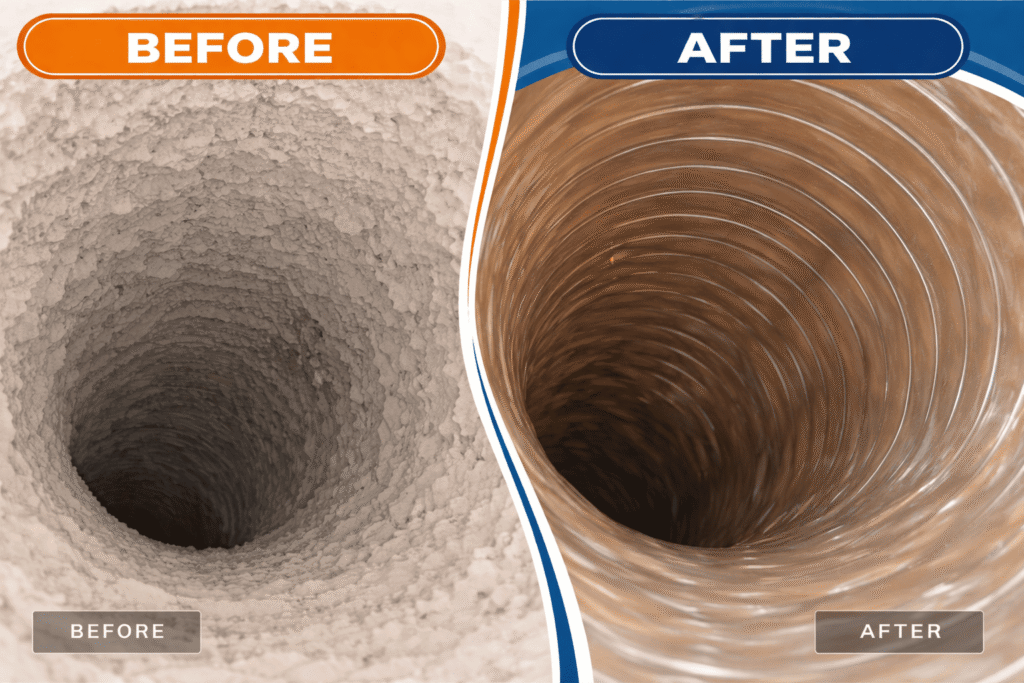
The efficiency of this heat exchange process depends entirely on how much contact area the warm air has with the cold coil surfaces. The hundreds of thin fins on the coil exist precisely to maximize that contact surface area within a compact unit. When those fin surfaces are covered by a layer of dust and debris, the insulating layer between the warm air and the cold refrigerant tubing reduces heat transfer. The coil is still cold, the refrigerant is still flowing, but the system cannot move as much heat per hour as it was designed to because the contamination layer is blocking the exchange.
Why Evaporator Coils Get Dirty Faster in Columbia, MO Than Many Other Markets
The rate at which an evaporator coil accumulates contamination depends on the volume and composition of particulates in the return airstream. Columbia, MO and Boone County have three specific factors that push local coils toward contamination faster than the national average cleaning interval suggests.
One of Missouri’s Longest Pollen Seasons
Boone County’s pollen season runs from late February through October, covering oak, cedar, hickory, and grass species across nearly nine months. Pollen particles that enter the home through doors, windows, and outdoor air intake pass through the return air system and deposit on the evaporator coil fins. During peak pollen weeks in April and May, the deposition rate on coil surfaces is measurably higher than during low-pollen months. Columbia, MO homeowners with allergies often schedule professional evaporator coil cleaning in spring precisely because the coil has accumulated a heavy pollen layer over the previous season that now circulates indoors with every cooling cycle.
High Humidity Creates Ideal Conditions for Coil Contamination
The evaporator coil operates below the dew point of indoor air, which means it is continuously wet during air conditioning operation as it removes moisture from the air passing across it. This constant moisture on the coil surface makes it significantly more adhesive to airborne particles than a dry surface. Dust, pollen, and organic debris that would simply pass through a dry surface instead stick to the wet coil fins and remain there. Missouri’s summer humidity, regularly above 70 percent across Boone County, means the coil runs wetter and accumulates contamination faster than coils in lower-humidity climates.
Columbia Homes Run AC Systems Five to Six Months Per Year
Columbia, MO’s warm season typically runs from May through September, with meaningful cooling demand beginning in late April and extending into October. A system that runs five to six months per year accumulates coil contamination at a pace that makes annual inspection reasonable and every two to three year professional cleaning standard. Homes with pets, high occupancy, or systems with undersized or infrequently replaced filters reach the contamination threshold that affects cooling performance faster than this baseline.
What a Dirty Evaporator Coil Does to Your AC System in Columbia, MO
A contaminated evaporator coil creates a chain of consequences that extends well beyond reduced cooling comfort. Each effect compounds the next, and they all get worse the longer the coil goes without professional cleaning.
Cooling Capacity Drops by Up to 30 Percent
Industry data consistently shows that a coil with heavy contamination can lose up to 30 percent of its rated cooling capacity because the debris layer insulates the fin surfaces and reduces heat transfer efficiency. For a Columbia, MO home that already faces high cooling demand from Missouri summers, a 30 percent reduction in cooling output means the system simply cannot keep up on the hottest days regardless of how long it runs. This is the most direct reason a dirty evaporator coil leads to an AC that runs continuously but cannot reach the thermostat setpoint.
Energy Consumption Rises by Up to 40 Percent
When cooling capacity drops, the system compensates by running longer cycles to move the same amount of heat. Longer run times mean more compressor hours, more blower motor hours, and higher electricity consumption per degree of cooling delivered. Studies of residential AC systems show that heavily contaminated coils can drive energy consumption up to 40 percent higher than a clean system delivering equivalent cooling output. In Columbia, MO where summer utility bills are already elevated by five to six months of continuous cooling demand, this efficiency loss represents a significant and entirely preventable monthly cost.
Ice Forms on the Coil and Shuts the System Down
When a contaminated coil cannot transfer heat efficiently, the refrigerant inside the tubing gets colder than its design operating temperature because it is absorbing less heat from the air. Below a certain refrigerant temperature threshold, the moisture condensing on the coil surface freezes rather than draining away. Ice builds up on the fin surfaces, further blocking airflow, dropping temperatures further, and producing more ice in a feedback loop that eventually results in a complete ice block on the coil and total loss of airflow. Columbia, MO homeowners who find their AC blowing warm air after running normally, or who notice ice visible around the air handler, are almost always dealing with a frozen coil caused by contamination.
The Compressor Is Put at Risk
The compressor is the most expensive single component in your AC system, typically costing several hundred to over a thousand dollars to replace in a Mid-Missouri residential installation. When the evaporator coil cannot absorb heat properly, the refrigerant returning to the compressor may still carry liquid refrigerant rather than having fully converted to vapor as designed. Liquid refrigerant entering the compressor causes a condition called liquid slugging, which can damage or destroy the compressor in a single event. A clean evaporator coil that operates at its designed efficiency is the first line of protection for your compressor.
Mold Grows on the Coil and Distributes Spores Into Your Home
The evaporator coil is wet, dark, and loaded with organic debris. These are ideal conditions for mold and mildew growth. Once mold establishes on the coil surfaces, each cooling cycle distributes spores through the supply duct system and into every room in your Columbia, MO home. Household members with allergies or asthma typically notice worsening symptoms that coincide with the start of the cooling season and improve when the system is off, which is the direct signature of mold on the evaporator coil circulating through the duct system.
Signs Your Evaporator Coil Needs Professional Cleaning in Columbia, MO
Because the evaporator coil is inside the air handler unit and not visible during normal operation, Columbia, MO homeowners typically identify the problem through its effects on the system rather than by seeing the coil directly. These are the clearest indicators that professional evaporator coil cleaning is needed:
- AC runs constantly but cannot reach the thermostat setpoint. On a hot Columbia summer day, a clean system should cycle on and off to maintain the set temperature. If the system runs for hours without reaching the setpoint or only gets within two to three degrees before stopping, reduced heat transfer from a contaminated coil is the primary suspect.
- Airflow from supply vents feels reduced. A contaminated evaporator coil physically blocks some of the air passing through the air handler. As the coil accumulates debris and potentially ice, the total volume of conditioned air pushed into the duct system decreases, and supply vents throughout the home deliver less airflow than normal.
- Ice visible on or around the air handler. Any visible ice on the refrigerant lines, the air handler unit, or the supply plenum means the coil has already begun to freeze. Shut the system off immediately and allow the ice to melt before running it again. Continued operation with a frozen coil risks compressor damage.
- Musty or moldy odor when the AC runs. An odor that appears specifically when the AC system is on and fades when it shuts off almost always indicates mold or mildew on the evaporator coil or in the immediate air handler area. Air fresheners do not resolve this because the source is inside the system.
- Higher than normal electricity bills during cooling season. A gradual increase in summer utility bills in a Columbia, MO home without a change in usage habits or occupancy often traces back to HVAC efficiency loss from a contaminated evaporator coil driving longer run times and higher compressor hours.
- The system has not had coil cleaning in two or more years. Given Columbia’s pollen load and humidity levels, an evaporator coil that has operated through two full cooling seasons without professional cleaning has almost certainly accumulated enough contamination to affect system performance measurably, even if visible symptoms are not yet obvious.
How TigerElite Cleans Evaporator Coils in Columbia, MO
Evaporator coil cleaning requires access to the air handler unit and the right cleaning approach for the specific type and condition of the coil. The fins on an evaporator coil are extremely thin aluminum, typically spaced at 12 to 20 fins per inch, and can be permanently bent or damaged by incorrect technique. High-pressure air or water directed at the wrong angle crushes fins and permanently reduces airflow capacity. Harsh chemical cleaners can corrode the aluminum fin material and copper tubing. Professional evaporator coil cleaning uses the right tools and process to remove contamination without damaging the coil.
TigerElite’s evaporator coil cleaning process in Columbia, MO includes:
- System shutdown and safe access. We shut the system down completely before opening the air handler to access the coil, protecting both the equipment and the technician.
- Dry debris removal. We remove loose surface debris from the accessible coil surfaces using a soft brush and HEPA vacuum before applying any cleaning solution, preventing loose particles from being driven deeper into the fin stack.
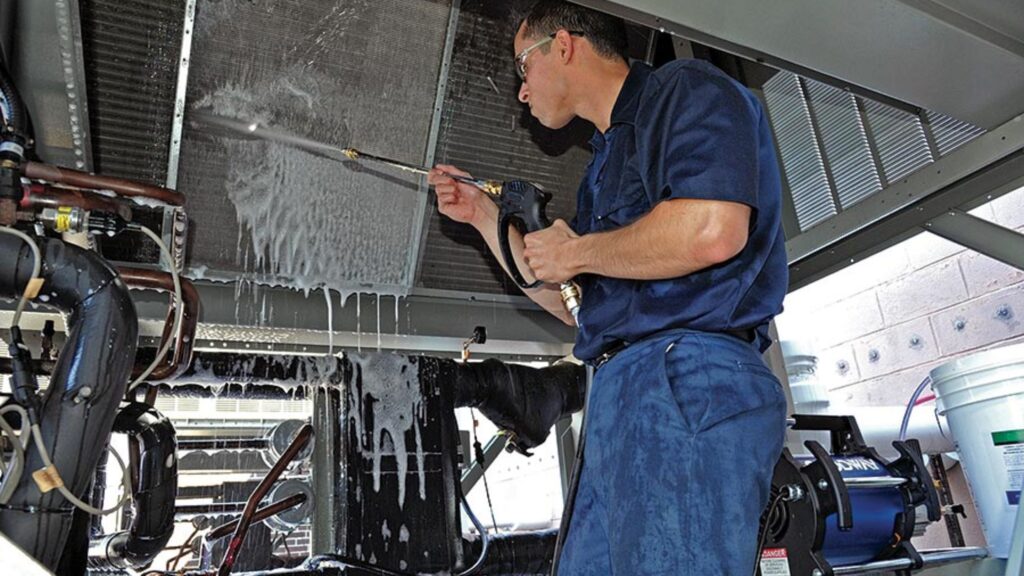
- Coil-safe foaming cleaner application. We apply a non-corrosive, pH-neutral foaming cleaner formulated specifically for evaporator coil fins. The foam penetrates between the fin surfaces, encapsulates embedded debris and organic material, and lifts it away from the fin surfaces as it drains into the condensate pan.
- Condensate pan inspection and cleaning. We inspect the drain pan below the coil for standing water, mold growth, and drain line obstruction. A blocked condensate drain causes water to back up into the air handler and eventually overflow into the home. We clear the drain line and clean the pan as part of the coil service.
- Post-cleaning system verification. We run the system after cleaning to verify normal airflow, confirm proper condensate drainage, and check that supply vents throughout the Columbia home are delivering improved airflow before we close up the air handler.
Should You Combine Evaporator Coil Cleaning With Other HVAC Services?
The evaporator coil, blower fan, and air duct system all share the same airstream and contaminate each other continuously. Cleaning the coil without addressing the blower wheel means a dirty fan redistributes debris back onto the freshly cleaned coil within the first operating cycle. Cleaning both without addressing the duct system leaves contaminated duct runs as an ongoing source of particulates returning to the coil through the return air path.
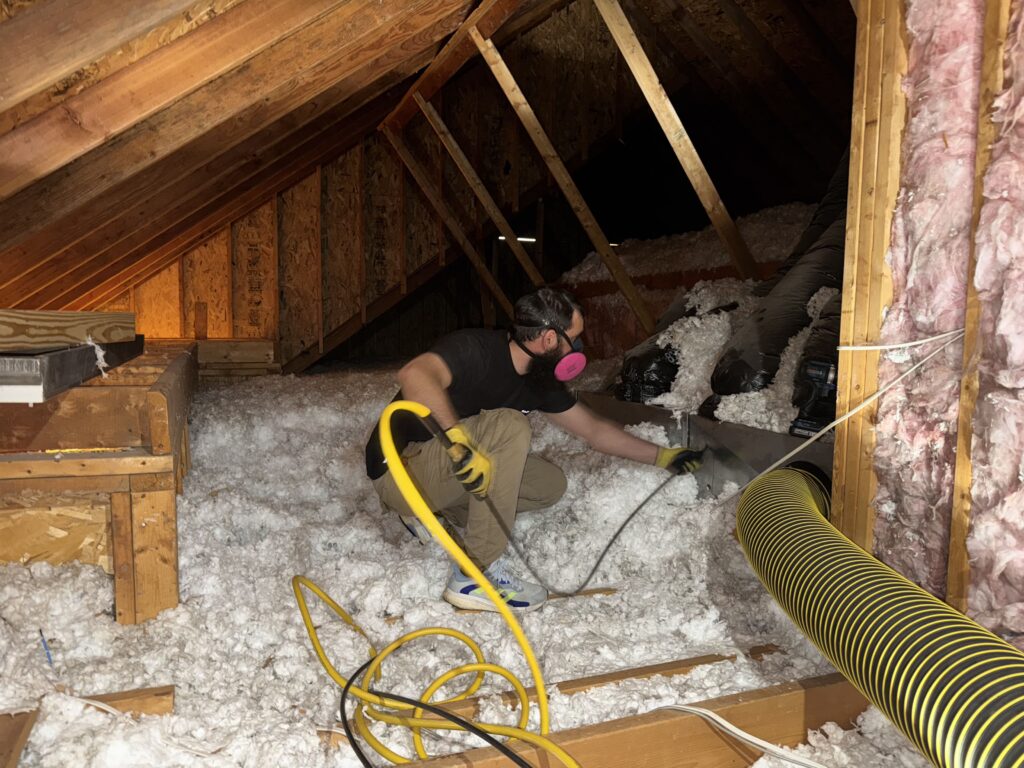
TigerElite recommends combining evaporator coil cleaning with blower fan cleaning and air duct cleaning for any Columbia, MO home that has not had a full HVAC system service in three or more years. Scheduling all three together in a single appointment means one mobilization, one HEPA setup, and a complete system that is clean from the duct runs through the air handler in a single visit.
For Columbia homes where musty odors or visible mold near registers are present, adding air duct sanitization to the appointment addresses the microbial contamination that physical cleaning alone does not eliminate from porous duct surfaces and the air handler interior.
How Often Should the Evaporator Coil Be Cleaned in a Columbia, MO Home?
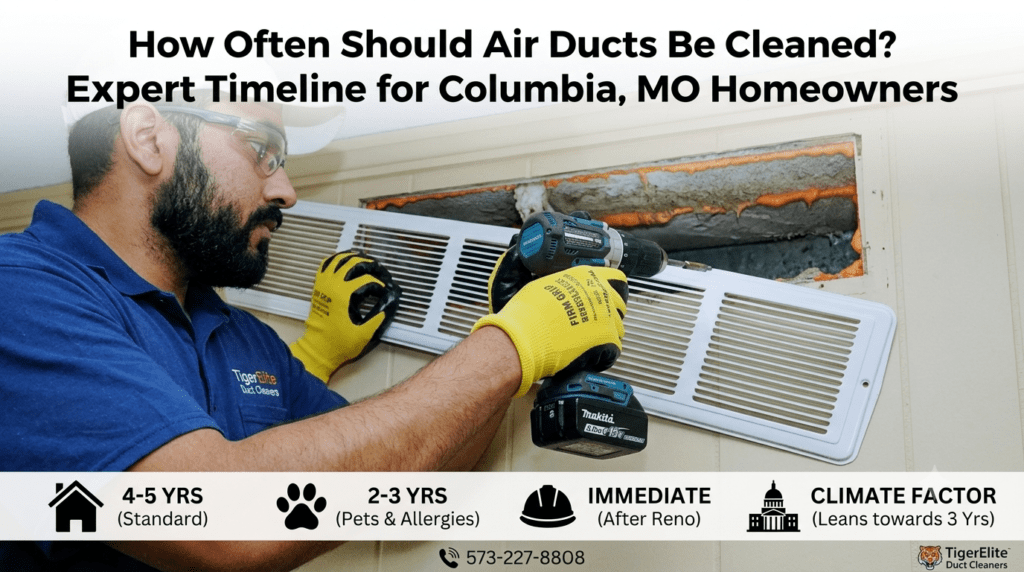
Industry guidance recommends professional evaporator coil inspection annually and cleaning every one to three years depending on household conditions. For Columbia, MO specifically:
- Every 1 to 2 years: Columbia, MO homes with pets, allergy sufferers, high occupancy, or a history of filter neglect. The combination of Missouri’s pollen load and the adhesive wet coil surface means these households reach performance-affecting contamination levels within one to two cooling seasons.
- Every 2 to 3 years: average Columbia household with consistent filter maintenance, no pets, and standard occupancy.
- Immediately, regardless of last service: any Columbia, MO home displaying the warning signs above, any home where the coil has not been professionally cleaned in three or more years, and any home purchased without HVAC maintenance documentation.
Schedule Evaporator Coil Cleaning in Columbia, MO with TigerElite Today
A dirty evaporator coil is the most common hidden cause of an AC system that runs hard but cools poorly in a Columbia, MO home. The coil sits out of sight, accumulates contamination through every cooling cycle, and progressively loses the efficiency it was designed to deliver until the symptoms become impossible to ignore. By the time ice is forming or the compressor is at risk, the coil has been underperforming for months or years.
TigerElite Duct Cleaners provides professional evaporator coil cleaning throughout Columbia, MO, Ashland, Jefferson City, Fulton, Hallsville, Centralia, Harrisburg, and all of Mid-Missouri. We use coil-safe foaming cleaners, HEPA vacuum extraction, condensate drain inspection, and post-cleaning system verification on every job. Free estimates, transparent pricing, honest service. Call 573-227-8808 or book at tigereliteductcleaners.com.
Frequently Asked Questions
How Much Does Evaporator Coil Cleaning Cost in Columbia, MO?
TigerElite provides free estimates before any work begins. Cost depends on the size and accessibility of the coil, the degree of contamination, and whether the service is combined with blower fan cleaning or air duct cleaning in the same appointment. Call 573-227-8808 for a free estimate specific to your Columbia, MO home.
Why Is My AC Running but Not Cooling My Columbia, MO Home?
The most common causes of an AC that runs continuously without reaching the thermostat setpoint are a dirty evaporator coil, a dirty air filter, low refrigerant, or a frozen coil caused by one of the first two problems. Before calling for refrigerant service, check and replace the air filter. If airflow is normal but cooling is still inadequate, professional evaporator coil cleaning in Columbia, MO is the next logical step and often resolves the issue entirely.
Can a Dirty Evaporator Coil Cause My AC to Freeze Up?
Yes. A dirty evaporator coil reduces airflow across the coil surface. With less warm air passing over the refrigerant tubing, the refrigerant temperature drops below its normal operating range and the moisture condensing on the coil surface freezes rather than draining away. Ice builds progressively until the coil is completely blocked, all airflow stops, and the system blows warm air or shuts down on a safety switch. Shut the system off and allow the ice to melt completely before restarting, then schedule professional coil cleaning before the next use.
How Long Does Evaporator Coil Cleaning Take in Columbia, MO?
A standalone evaporator coil cleaning in a Columbia, MO home typically takes 45 minutes to one and a half hours depending on the size of the air handler and the severity of contamination. When combined with blower fan cleaning and air duct cleaning in the same appointment, TigerElite completes the full system service in two to four hours.
Do You Provide Evaporator Coil Cleaning in Jefferson City and Ashland, MO?
Yes. TigerElite Duct Cleaners provides evaporator coil cleaning in Columbia, Jefferson City, Ashland, Fulton, Hallsville, Centralia, Harrisburg, and the surrounding Mid-Missouri area. Call 573-227-8808 to confirm availability for your address and get a free estimate.
Is Evaporator Coil Cleaning the Same as AC Coil Cleaning?
In residential HVAC, the terms are used interchangeably by most homeowners and cleaning services. Technically, an AC system has two coils: the evaporator coil indoors and the condenser coil in the outdoor unit. TigerElite’s AC coil cleaning service in Columbia, MO addresses the evaporator coil inside the air handler, which is the coil most directly responsible for indoor cooling performance and indoor air quality, and the one most prone to contamination from the indoor return airstream.