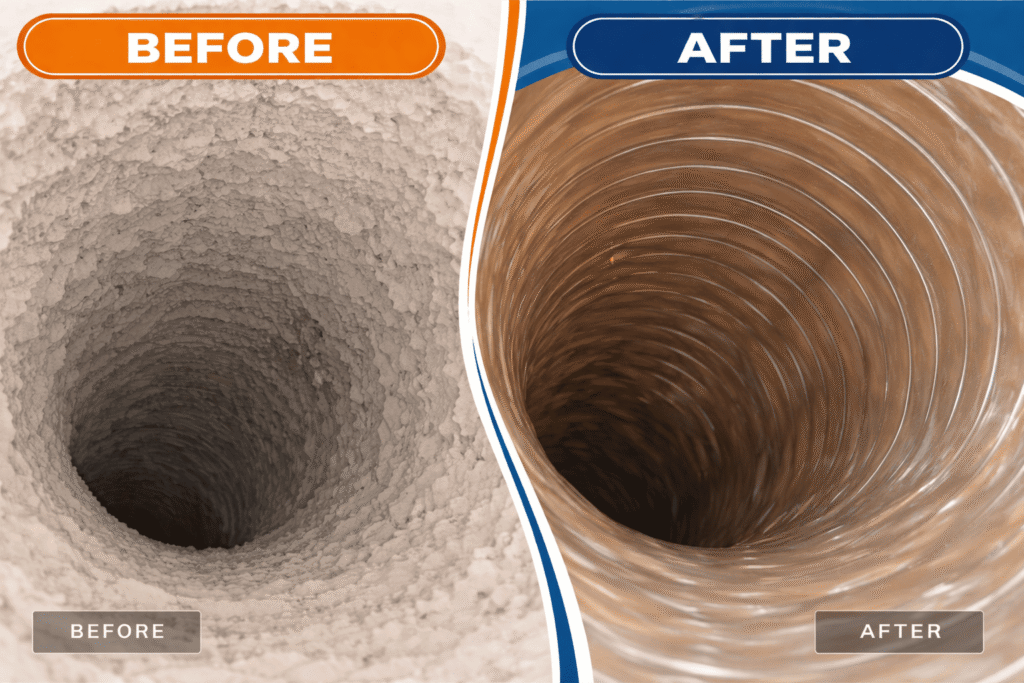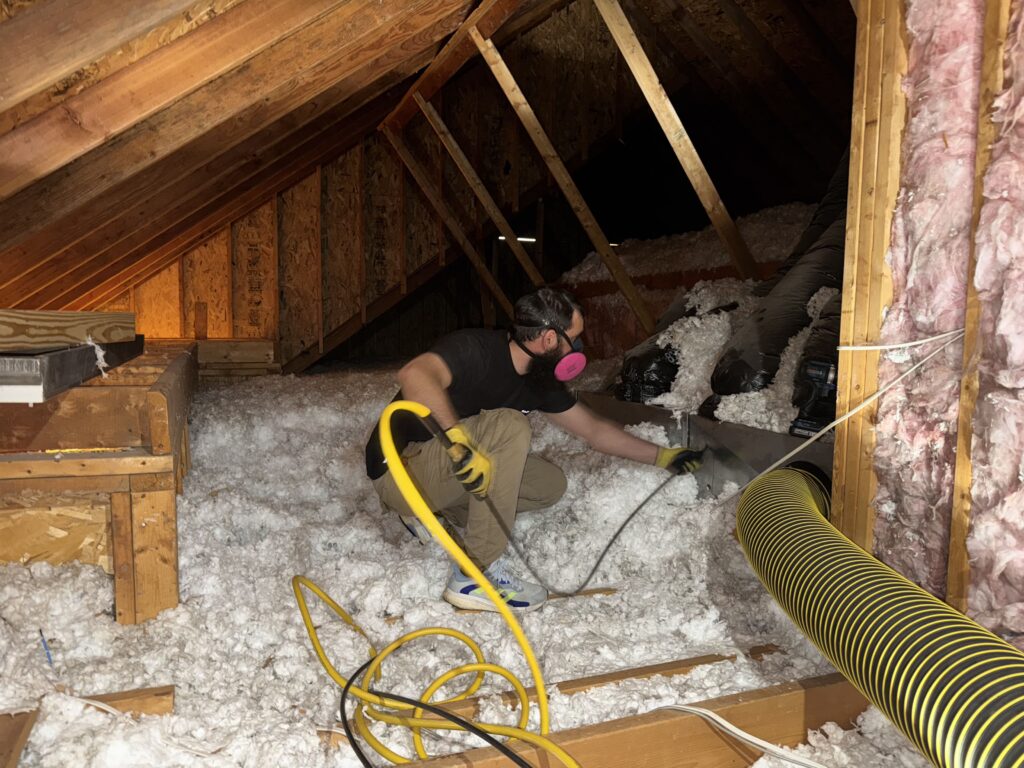
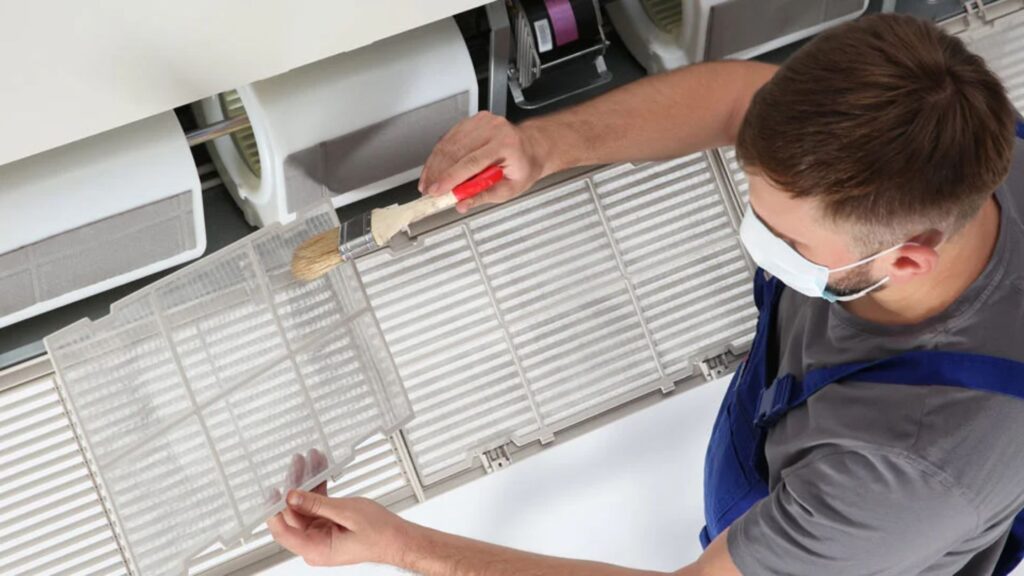
When Columbia, MO homeowners think about HVAC maintenance, air duct cleaning and filter replacement come to mind first. The blower fan rarely makes the list. That is a problem, because the blower fan is the single component responsible for moving all conditioned air through your entire duct system. When the blower wheel collects a heavy coating of dust and debris, which it does continuously in every home, it loses the ability to move air efficiently. The result is reduced airflow to every room, higher energy consumption per hour of operation, and accelerated mechanical wear on the component that your entire heating and cooling system depends on.
TigerElite Duct Cleaners provides professional blower fan cleaning in Columbia, MO and throughout Mid-Missouri as a standalone service and as part of a complete HVAC cleaning appointment. This guide covers what the blower fan does, how contamination affects its performance, what the warning signs of a dirty blower wheel look like in a Columbia home, and why blower fan cleaning is one of the highest-return maintenance investments you can make in your HVAC system.
What Is the HVAC Blower Fan and What Does It Do?
The blower fan, also called the blower wheel or squirrel cage fan, is the rotating component inside your air handler unit that draws return air from your home, passes it across the heating or cooling elements, and forces the conditioned air back out through the supply duct system to every room. Every cubic foot of air that enters or leaves any room in your Columbia, MO home passes through the blower fan. It runs every time your thermostat calls for heating or cooling, which in Mid-Missouri means it operates eight to ten months per year.
The blower wheel itself consists of dozens of curved metal fins arranged around a central hub, designed to generate high-volume airflow with minimal noise at the rotational speeds HVAC systems require. The geometry of those fins, specifically the precise curvature and spacing between them, is what produces the airflow volume your system was rated to deliver when it left the factory. When that geometry gets masked by accumulated dust and debris, the fan can no longer move air at its designed capacity regardless of how fast the motor spins.
How the Blower Fan Gets Contaminated in Columbia, MO Homes
Return air from every room in your home passes through the blower fan before it reaches the heating or cooling elements. That air carries microscopic particles: skin cells, pet dander, pollen, carpet fibers, cooking grease particles, and airborne dust. Your HVAC filter is positioned to capture particles before they reach the blower, but no filter catches everything. The finest particles pass through even high-quality filters, and any periods where the filter was clogged, absent, or undersized let larger particles through directly.
Once particles reach the blower wheel, static electricity and the curved geometry of the fins cause them to stick and accumulate. The buildup starts as a thin film and progresses over years into a thick, uneven coating that adds measurable weight to the wheel, unbalances the rotation, and fills the spaces between the fins that are responsible for generating airflow. In Columbia, MO homes where the system runs nearly continuously for eight to ten months, this accumulation happens faster than in markets with milder climates and shorter operating seasons.
Columbia’s Pollen Load Accelerates Blower Contamination
Boone County’s pollen season runs from late February through October, covering oak, hickory, cedar, and grass species. During peak pollen periods, the volume of particulate in return air increases significantly compared to lower-pollen months. This accelerates the rate at which the blower wheel accumulates a contamination layer, meaning Columbia, MO homeowners reach the threshold where blower fan cleaning becomes necessary faster than the national average service interval suggests.
Pets Add a Layer That Is Particularly Difficult to Remove
Pet dander and fine hair are among the most adhesive contaminants that reach the blower wheel. They bind to the fin surfaces at the molecular level and create a substrate that catches and holds subsequent dust particles more aggressively than a clean metal surface would. Columbia, MO homes with one or more pets reach heavy blower contamination levels in half the time of pet-free households and require more thorough extraction during the cleaning process.
What a Dirty Blower Fan Does to Your HVAC System and Energy Bills
The consequences of a contaminated blower wheel are directly measurable in your monthly energy bills and your HVAC system’s mechanical health. This is not a gradual cosmetic issue. It is a performance problem that gets worse with every month of continued operation.
Airflow Volume Drops as Fin Gaps Fill With Debris
The gaps between the blower fins are not decorative. They are the passages through which air is accelerated and directed into the supply duct system. As those gaps fill with accumulated debris, the effective volume of air the wheel can move per rotation decreases. A wheel with heavily clogged fins may deliver only 60 to 70 percent of its rated airflow to the duct system, which means every room in your Columbia home receives less conditioned air than the system was designed to deliver.
The Motor Works Harder and Wears Faster
When the blower wheel cannot move its rated volume of air, the system’s controls respond by running the motor longer to compensate for the reduced airflow per cycle. The added weight of debris on the wheel also increases the load on the motor shaft and bearings. Over time, this combination of longer run times and increased mechanical load accelerates wear on the motor windings, bearings, and capacitor, which are the components most likely to fail in an otherwise healthy HVAC system.
Energy Bills Rise Steadily Without a Clear Cause
Because blower contamination builds gradually, the associated increase in energy consumption is gradual enough that most Columbia, MO homeowners attribute rising utility bills to rate increases rather than equipment degradation. The system is using more electricity per hour of operation because the motor is working harder, and running more hours per day because it cannot maintain the thermostat setpoint as efficiently with restricted airflow. The cumulative cost of operating a contaminated blower wheel over two to three years frequently exceeds the cost of a professional cleaning several times over.
Uneven Temperatures Develop Between Rooms
Reduced total airflow from the blower means the supply duct system receives less pressure, and rooms at the ends of longer duct runs receive proportionally less conditioned air than rooms closer to the air handler. In Columbia, MO homes with multiple levels or extensive duct layouts, this manifests as persistent temperature inconsistencies between rooms that the thermostat cannot resolve because it measures only one location in the home.
Warning Signs Your Blower Fan Needs Professional Cleaning in Columbia, MO
The blower fan is inside the air handler unit and not visible during normal HVAC operation. These are the observable symptoms that indicate contamination has reached a level where blower fan cleaning in Columbia, MO should be scheduled:
- Weak airflow from supply vents even when the filter is clean and the system is running normally. If you can hold a piece of paper near an open supply register and it barely moves while the system runs, the blower is not delivering its rated airflow volume.
- HVAC system running longer cycles than it used to maintain the same thermostat setpoint. If cooling cycles that used to last 12 minutes now run 20 or more minutes to reach the same temperature, reduced airflow from the blower is a primary suspect.
- Persistent temperature differences between rooms that were not present when the system was newer or after the last service. Rooms farther from the air handler are most affected because they depend on adequate system pressure to receive their designed airflow volume.
- Unusual vibration or rattling from the air handler during operation. Heavy, uneven debris accumulation on the blower wheel unbalances the rotation and produces vibration that transmits through the air handler housing and into the structure of the home.
- Rising energy bills without a change in usage or rates. If your Columbia, MO utility bills have increased gradually over the past one to two years and your usage patterns have not changed significantly, HVAC efficiency loss from a contaminated blower wheel is one of the first things to investigate.
How TigerElite Performs Blower Fan Cleaning in Columbia, MO
Blower fan cleaning requires access to the air handler unit, which means working inside the mechanical compartment of your HVAC system rather than just at the registers and duct openings. This is not a task where compressed air or a household vacuum produces adequate results. The geometry of the blower wheel fins requires detail cleaning tools that can reach the full depth of each fin passage to actually remove accumulated debris rather than compress it further.
TigerElite’s blower fan cleaning process in Columbia, MO includes:
- Air handler access and pre-cleaning inspection. We access the blower compartment and inspect the wheel, housing, and motor assembly before starting any cleaning to assess contamination levels and check for any mechanical issues such as bearing wear or capacitor condition.
- Fin-by-fin extraction cleaning. We use detail brushes and HEPA vacuum extraction to clean the full depth of every fin passage on the blower wheel, removing the accumulated debris layer completely rather than redistributing it or compressing it against the fin surfaces.
- Blower housing and motor compartment cleaning. We clean the interior of the blower housing and the accessible surfaces of the motor assembly, removing settled debris that would otherwise recontaminate the wheel during the first operating cycle after cleaning.
- Evaporator coil area cleaning. When we are working inside the air handler, we clean the accessible evaporator coil surfaces as well, since coil contamination directly compounds blower efficiency loss by adding resistance to airflow through the unit.
- Post-cleaning airflow verification. We run the system after cleaning to confirm that airflow has been restored to supply registers throughout the home before we close up the air handler and pack out.
Should You Combine Blower Fan Cleaning With Air Duct Cleaning in Columbia, MO?
Blower fan cleaning and air duct cleaning address different parts of the same system, and scheduling them together during the same appointment is the most efficient approach for most Columbia, MO homeowners. Here is the practical reason: if the blower wheel is heavily contaminated, some of that debris has almost certainly made its way into the supply duct runs over months or years of operation. Cleaning the blower without addressing the ductwork leaves a contamination reservoir in the system. Cleaning the ducts without addressing the blower means a dirty wheel continues redistributing particles into the freshly cleaned duct runs from the first operating cycle.
TigerElite recommends combining blower fan cleaning with a full air duct cleaning service for any Columbia home that has not had either service in the past three years. When both are scheduled together, we use a single mobilization, a single HEPA vacuum setup, and complete the entire system in one appointment rather than requiring separate visits for each component.
For Columbia homes where biological contamination is also a concern, including homes with moisture history, musty odors from the vents, or visible mold near registers, adding air duct sanitization to the same appointment addresses the microbial load that a mechanical cleaning alone does not eliminate.
How Often Does the Blower Fan Need Cleaning in a Columbia, MO Home?
The blower fan does not need cleaning as frequently as the air filter, but it accumulates contamination much faster than most homeowners realize because it processes every cubic foot of return air the system handles. For Columbia, MO residential properties, a practical service interval based on household characteristics looks like this:
- Every 2 to 3 years: average Columbia household with no pets, standard occupancy, and consistent filter maintenance.
- Every 1 to 2 years: households with one or more pets, allergy sufferers, high occupancy, or any history of filter neglect.
- Immediately, regardless of last service date: any home displaying the warning signs listed above, any home where the duct system has not been cleaned in five or more years, and any Columbia, MO home purchased without documentation of prior HVAC maintenance.
Schedule Blower Fan Cleaning in Columbia, MO with TigerElite Today
The blower fan is the engine of your entire HVAC system, and it is the component most likely to be accumulating performance-degrading contamination right now in your Columbia, MO home without a single visible symptom at the register level. By the time weak airflow and rising energy bills become noticeable, the blower wheel has been underperforming for months or years.
TigerElite Duct Cleaners provides professional blower fan cleaning throughout Columbia, MO, Ashland, Jefferson City, Fulton, Hallsville, Centralia, Harrisburg, and the wider Mid-Missouri area. We clean the blower wheel fin by fin using HEPA vacuum extraction, inspect the motor and housing, verify airflow restoration after the job, and provide free estimates before any work begins.
If your Columbia home has not had blower fan cleaning in the past two years, the efficiency loss is already costing you money every month.
Frequently Asked Questions
What Is Blower Fan Cleaning and Is It Different from Air Duct Cleaning?
Yes, they are different services that address different parts of the same HVAC system. Air duct cleaning removes contamination from the supply and return duct runs throughout your home. Blower fan cleaning specifically addresses the rotating fan wheel inside the air handler unit that moves all conditioned air through those ducts. Both services are often recommended together because a dirty blower contaminates clean ducts and vice versa.
How Much Does Blower Fan Cleaning Cost in Columbia, MO?
TigerElite provides free estimates before any work begins. Cost depends on the system type, degree of contamination, and whether the service is combined with air duct cleaning or other HVAC cleaning services during the same appointment. Call 573-227-8808 for a free estimate specific to your Columbia, MO home.
What Maintenance Keeps a Blower Fan Working Well?
The most effective maintenance for the blower fan is consistent HVAC filter replacement on schedule, which reduces the volume of particles that reach the wheel, combined with professional blower fan cleaning every two to three years. Using a MERV 8 to 11 rated filter appropriate for your system is more effective at protecting the blower than switching to the highest-rated MERV filter available, since very high MERV filters can restrict airflow and force the motor to work harder.
Can a Dirty Blower Fan Affect Indoor Air Quality?
Yes. The blower fan processes all return air from your home before distributing conditioned air back through the supply ducts. Debris accumulated on the blower wheel surfaces can shed particles into the airstream during operation, adding to the particulate load circulating through your Columbia home. This is one reason blower fan cleaning and air duct sanitization are often combined when indoor air quality is the primary concern.
Do You Provide Blower Fan Cleaning in Jefferson City and Ashland, MO?
Yes. TigerElite Duct Cleaners serves Columbia, Jefferson City, Ashland, Fulton, Hallsville, Centralia, Harrisburg, and the surrounding Mid-Missouri area for blower fan cleaning and all HVAC cleaning services.
How Do I Know If My Blower Fan Needs Cleaning?
The clearest signs are weak airflow from supply vents with a clean filter installed, HVAC cycles running longer than normal to reach the thermostat setpoint, persistent temperature differences between rooms, unusual vibration from the air handler during operation, and gradually rising energy bills without a clear change in usage. If your Columbia, MO home has had more than two years of continuous HVAC operation since the last blower cleaning, scheduling an inspection is worthwhile regardless of visible symptoms.