What happens if you don’t clean your air ducts is a question most homeowners never think about until a problem becomes impossible to ignore. Your ductwork sits behind walls, above ceilings, and under floors, silently collecting dust, pet dander, pollen, and debris year after year. Out of sight, out of mind. But every time your HVAC system cycles on, it pushes air through that contaminated network and into every room of your home.
The consequences are not dramatic overnight. They build gradually, affecting your indoor air quality, your HVAC efficiency, your energy bills, and potentially your family’s health. At TigerElite Duct Cleaners, we have seen what fifteen and twenty years of neglect looks like inside Columbia, MO ductwork, and this guide covers the real risks that accumulate when Air Duct Cleaning gets postponed indefinitely.
What Are the Risks of Not Cleaning Your Air Ducts?
Dirty air ducts circulate accumulated dust, allergens, and contaminants through your home every time the HVAC runs, reducing indoor air quality, forcing your system to work harder, increasing energy costs, and creating conditions for mold growth and pest activity inside the ductwork. The longer ducts go without cleaning, the worse each of these problems becomes.
The EPA reports that indoor air pollutant levels can be two to five times higher than outdoor air, and your duct system is one of the primary pathways those particles travel. When contamination builds unchecked inside your ductwork, your HVAC system does not just fail to filter it out. It actively distributes it into every room, every time the heating or cooling cycles on. Most homeowners assume their air filter handles this problem, but filters only capture particles passing through the return. Debris already settled inside the duct runs sits beyond the filter’s reach and recirculates continuously.
Here are the specific consequences that develop when residential air duct systems go years without professional cleaning:
- Declining indoor air quality as accumulated dust, pet dander, pollen, and microbial particles recirculate through the home with every HVAC cycle, exposing your family to irritants that surface cleaning cannot address.
- Increased allergy and respiratory symptoms including congestion, sneezing, eye irritation, and worsening asthma, particularly in Missouri’s high-pollen spring season when outdoor allergens compound the indoor load.
- Reduced HVAC efficiency as dust and debris restrict airflow through the ductwork, forcing the blower motor, compressor, and other components to work harder to maintain the desired temperature.
- Higher monthly energy bills resulting from the added strain on your heating and cooling system. NADCA reports that contaminated HVAC systems can lose significant operating efficiency.
- Increased risk of mold growth inside ductwork, especially in Columbia, MO where summer humidity regularly exceeds 70 percent and condensation around the evaporator coil can introduce moisture into the duct system.
What Problems Develop Inside Neglected Air Ducts Over Time?
The longer air ducts go without cleaning, the more severe and compounding the consequences become. What starts as a thin dust film at year three evolves into restricted airflow by year ten and potential biological contamination by year fifteen. These are not hypothetical risks. They are patterns we observe consistently across Columbia homes during HVAC duct cleaning service appointments.
Understanding how these problems develop over time helps you recognize whether your home is already experiencing the early or advanced stages of duct neglect. Here is what happens in three critical areas.
Dirty Air Ducts and Your Family’s Health
Dirty air ducts pose a gradual but measurable threat to your household’s respiratory comfort. Every time your HVAC system runs, it pushes air across contaminated duct surfaces and carries accumulated particles directly into your living spaces. Dust mites, pet dander, pollen, mold spores, and bacteria that have settled inside the ductwork become airborne again and again with each heating or cooling cycle. In Columbia, MO, where spring pollen from oak, hickory, and grass species is heavy and HVAC systems run eight to ten months per year, the exposure is nearly constant.
The health risks of dirty air ducts are most noticeable in households with vulnerable members:
- Allergy and asthma sufferers experience worsening symptoms at home, including morning congestion, frequent sneezing, and respiratory tightness that improves when they leave the house and returns when the system runs.
- Children and elderly residents are more sensitive to airborne irritants and may develop persistent coughs, sinus issues, or upper respiratory infections that do not respond fully to medication because the environmental trigger remains inside the duct system.
- Pet owners face compounding exposure because pet dander inside the ducts combines with seasonal pollen and household dust to create a higher overall allergen load than any single source would produce alone.
HVAC Efficiency Loss and Rising Energy Bills
Duct contamination directly impacts your HVAC system’s ability to move air efficiently. When dust and debris accumulate on the interior walls of your ductwork, they narrow the effective diameter of the air passage and create friction that slows airflow. Your blower motor compensates by running longer and harder, which increases energy consumption and accelerates mechanical wear.
The financial impact of neglected ductwork adds up steadily over time:
- Higher monthly energy bills that increase gradually enough to go unnoticed, since most homeowners attribute rising costs to rate increases rather than duct contamination reducing their system’s efficiency.
- More frequent HVAC repairs as the blower motor, compressor, and other components wear faster under the added strain of restricted airflow, leading to breakdowns that a clean system would not experience.
- Shortened system lifespan because years of operating under unnecessary load causes cumulative mechanical damage. Replacing an HVAC system costs thousands of dollars, while regular duct cleaning is a fraction of that investment. Understanding whether Air Duct Cleaning Is Worth The Cost becomes much clearer when you consider what neglect costs over time.
Mold Growth, Moisture, and Long-Term Duct Damage
Mold inside air ducts is the most serious consequence of long-term neglect, and Missouri’s humid climate makes Columbia homes particularly susceptible. During summer cooling, your air conditioning system removes moisture from indoor air at the evaporator coil. If that moisture does not drain properly, or if condensation forms inside ductwork near the air handler, it creates a damp environment where mold and mildew thrive. Add years of accumulated organic dust as a food source, and you have ideal conditions for biological growth inside a system that distributes air to every room.
The signs and consequences of mold-related duct contamination are difficult to reverse without professional intervention:
- Musty or stale odors that appear only when the HVAC runs are the most common early indicator of mold or mildew inside the ductwork, and air fresheners or surface cleaning will not resolve the smell because the source is inside the system.
- Visible mold near registers or the air handler signals that contamination has advanced beyond the early stages and may require both duct cleaning and Air Duct Sanitization to fully address the biological growth.
- Pest activity including rodent droppings, insect remains, or nesting materials inside the ductwork, which is a risk in older Columbia homes where duct joints and connections have loosened over time, providing entry points for pests seeking shelter.
How TigerElite Reverses Years of Duct Neglect in Columbia, MO?
Every consequence described above, the declining indoor air quality, the HVAC strain, the mold risk, and the rising energy costs, traces back to one root cause: contamination that has been allowed to accumulate inside a system you cannot see without professional equipment. The longer it sits, the more it costs you.
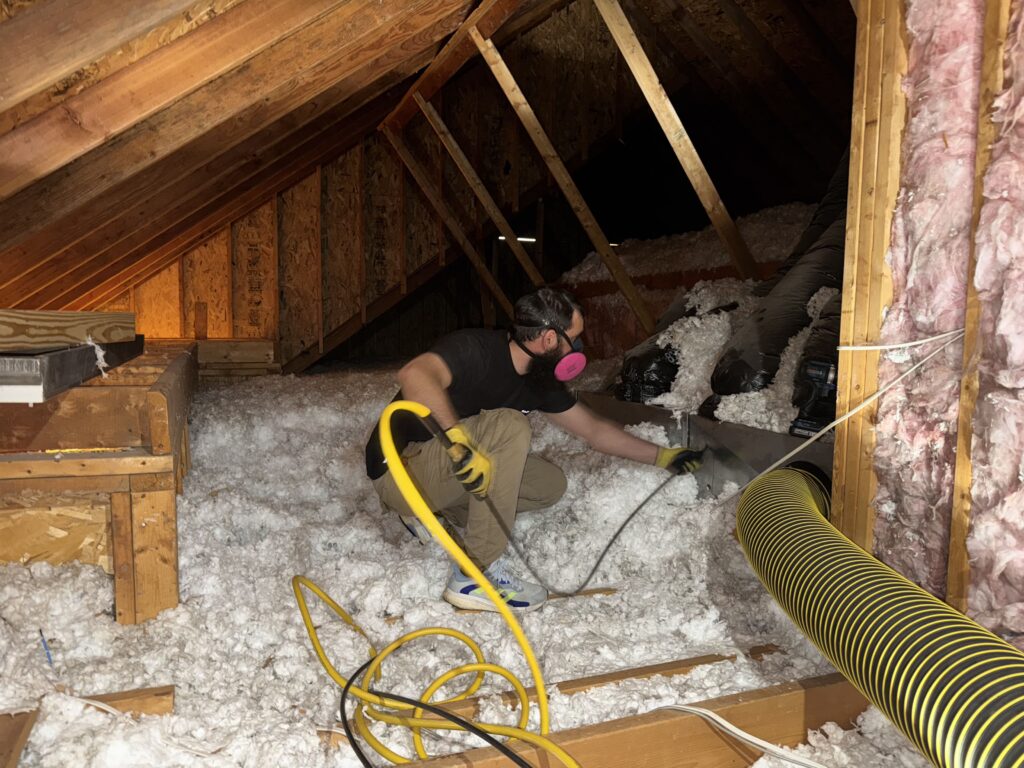
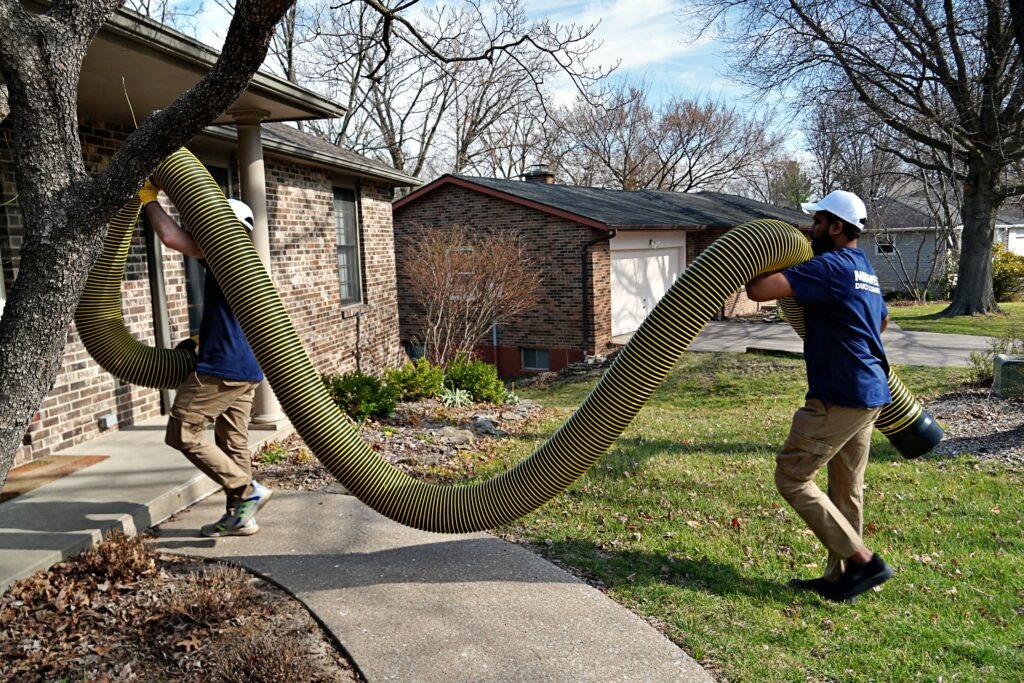
TigerElite Duct Cleaners provides complete HVAC duct cleaning service for residential and small commercial properties throughout Columbia, MO and Mid-Missouri. We use a NADCA-approved source removal process with rotary brush agitation and HEPA-rated negative air equipment to physically extract years of accumulated dust, debris, and contaminants from your ductwork. We do not just blow air through the system. We scrub and extract everything that has been building up since the last time someone actually cleaned your ducts.
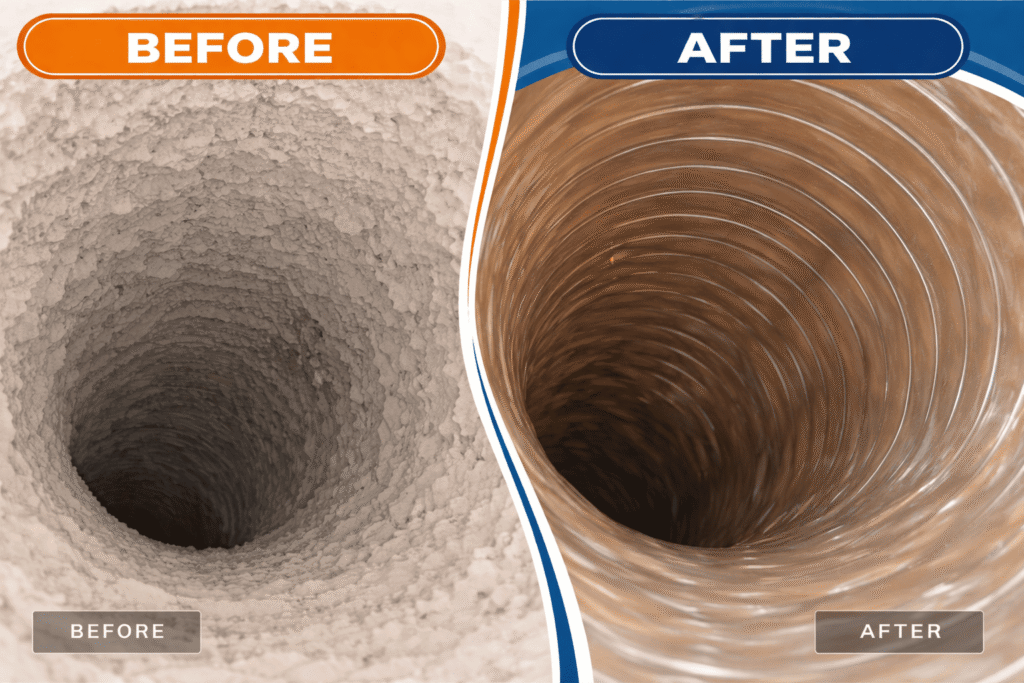
- Full before-and-after documentation on every job, so you can see exactly what was hiding inside your ducts and verify that it has been completely removed. See real Air Duct Cleaning Before and After Results from Columbia homes.
- Complete system cleaning covering all supply and return ducts, the blower fan assembly, evaporator coil area, and every register, because partial cleaning leaves contamination behind to recontaminate the sections you did clean.
- Free phone estimates with transparent pricing starting at $450 for most Columbia-area homes. No hidden charges, no upselling, and honest recommendations about whether your system actually needs cleaning today or can wait.
Final Thoughts
What happens if you don’t clean your air ducts? The consequences are not sudden or dramatic. They build quietly over years: gradually declining air quality, slowly rising energy bills, increasing HVAC strain, and growing risk of mold in Missouri’s humid climate. By the time you notice the symptoms, the contamination inside your ductwork has been affecting your home for a long time.
The good news is that every one of these problems is reversible with a thorough professional air duct cleaning. Knowing How Often Sir Fucts Dhould Be Cleaned helps you prevent these issues from developing in the first place. If your Columbia home has not had a duct cleaning in five or more years, the buildup inside your system is already working against you.
Call TigerElite Duct Cleaners at 573-227-8808 for a free estimate, or book online today.
Frequently Asked Questions
Can Dirty Air Ducts Make You Sick?
Dirty air ducts circulate accumulated dust, allergens, mold spores, and bacteria through your home every time the HVAC runs. While the EPA states duct cleaning has not been conclusively shown to prevent health problems, prolonged exposure to these airborne contaminants can worsen allergies, asthma, and respiratory discomfort, especially in sensitive individuals.
How Do I Know if My Air Ducts Are Too Dirty?
The most common signs include visible dust around vent registers, rapid dust resettlement on furniture after cleaning, musty odors when the HVAC runs, uneven airflow between rooms, and unexplained worsening of allergy symptoms indoors. A professional duct inspection provides a definitive answer about your system’s condition.
Do Dirty Air Ducts Increase Energy Bills?
Yes. When dust and debris restrict airflow inside your ductwork, your HVAC system works harder to maintain the set temperature, consuming more energy. Research indicates that heavily contaminated systems can lose up to 30 percent of their operating efficiency, which translates directly to higher monthly utility costs.
Can Mold Grow Inside Air Ducts in Missouri?
Missouri’s humid summers create ideal conditions for mold growth inside ductwork, especially near the evaporator coil where condensation can accumulate. When organic dust provides a food source and moisture is present, mold and mildew can develop inside the system and distribute spores throughout your home every time the HVAC runs.
How Long Can You Go Without Cleaning Air Ducts?
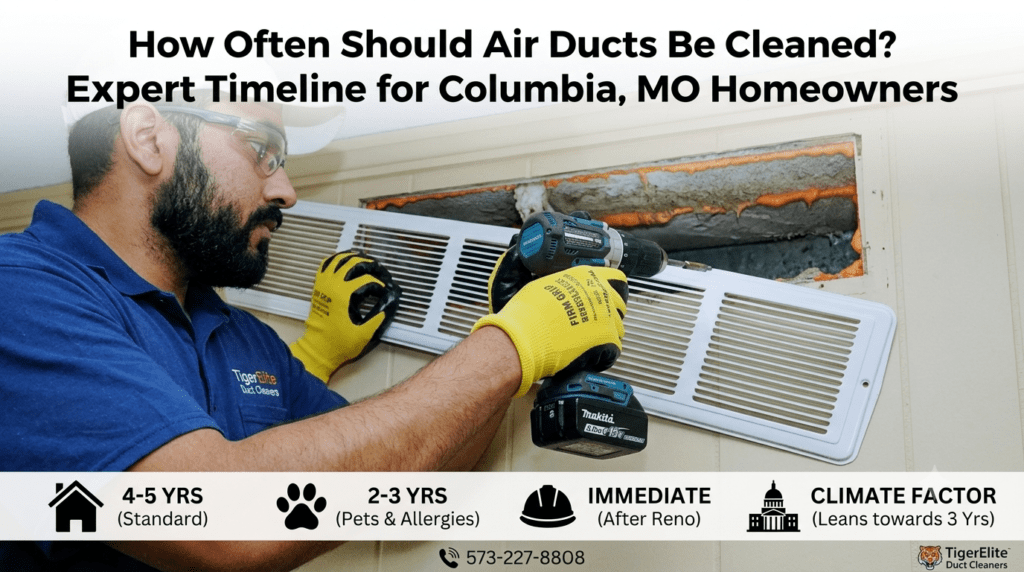
NADCA recommends cleaning every three to five years for most residential homes. However, homes with pets, allergies, recent renovations, or heavy HVAC usage in Missouri’s climate should lean closer to every three years. Going beyond five years without cleaning significantly increases the risks of declining air quality, HVAC strain, and potential mold growth.